
Salesforce Headless 360 at TDX 2026
Pre-built agents, no infrastructure, and API-driven CRM execution
A Practical Starting Point
For Salesforce Admins and Developers, the immediate question is operational:
Does “headless” mean more infrastructure to build and maintain?
With the Headless 360 model introduced at TDX 2026, the answer is increasingly no.
Agents no longer need to live inside the Salesforce UI—or even inside Salesforce infrastructure. Instead, they can run externally while using Salesforce APIs for secure, governed access to data and workflows.
This opens the door to using pre-built, pre-integrated agents without standing up new runtime environments inside your org.
What Salesforce Announced
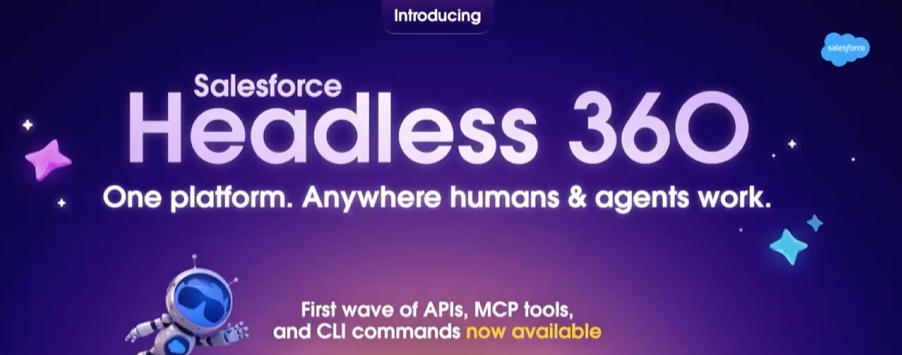
At TrailblazerDX 2026, Salesforce introduced Headless 360—an API-first architecture for AI agents.
Core capabilities:
API-first CRM access
Data, metadata, and automation are exposed via REST, SOAP, and Metadata APIsDecoupled agent execution
Agents can run outside Salesforce while remaining fully integratedMulti-channel delivery
Chat, voice, web, messaging, and background processing all become viable entry pointsAgent-driven orchestration
Agents can coordinate workflows across objects, records, and systems
Salesforce becomes a System of Context—a centralized source of structured customer data and business logic—while agents operate independently.
How iDialogue Fits into This Model
iDialogue Agents operate directly within this architecture.
Available on AgentExchange
iDialogue agents are distributed and discoverable as pre-built solutionsPre-built and pre-integrated
No agent infrastructure is required inside Salesforce
Agents are ready to connect using standard Salesforce APIsExternal execution layer
Agents run independently, supporting real-time and asynchronous workloadsMCP-style tooling
Agents use tools for:- Metadata discovery
- Querying Salesforce records
- Performing record insert/update operations
AppExchange security reviewed
iDialogue meets Salesforce security standards and governance requirements
Customer-Controlled Integration
All access to Salesforce remains fully governed by the customer.
- OAuth via Connected Apps / External Client Apps
- Scoped API permissions and object-level security
- Alignment with existing profiles, permission sets, and policies
This ensures that:
- Agents only access authorized data
- Security and compliance remain within Salesforce controls
- Integrations can be enabled without altering core architecture
Architecture in Practice
| Layer | Role |
|---|---|
| Salesforce | System of Context (data, metadata, workflows) |
| APIs | Secure access layer (REST, SOAP, Metadata) |
| iDialogue | Agent execution and orchestration layer |
| Channels | Chat, voice, web, documents, background jobs |
Agents operate across these layers without requiring a dedicated in-org runtime.
What This Means for Teams
- No infrastructure to deploy or manage inside Salesforce
- Immediate access to pre-built agents via AgentExchange
- Ability to extend CRM workflows into new channels
- Continued use of Salesforce as the authoritative data source
Admins and developers retain control over access and configuration, while agents handle execution.
Summary
The Headless 360 announcement at TDX 2026 introduces a model where:
- Salesforce provides context and governance
- Agents operate externally via APIs
- Experiences are delivered across any interface
iDialogue builds on this model by providing pre-built, API-integrated agents that connect securely to Salesforce—without requiring additional infrastructure inside the platform.
This allows teams to adopt agent-driven workflows while maintaining control over their CRM data and environment.